In this guide:
- Realistic UK price bands for light, moderate and severe infections.
- What actually pushes the price up or down.
- Whether a one-off clean-up or a rolling care plan works out cheaper over a year.
- What should be included in the price, and the questions worth asking before you pay.
Written for UK business owners who’ve discovered their WordPress site has been hacked, or who want a realistic figure in mind before they ask for quotes.
Finding out your website has malware on it is stressful enough without an open-ended quote landing in your inbox. Prices for WordPress malware removal in the UK vary a fair amount between providers, and not always for reasons that are obvious from the outside. This guide sets out realistic price ranges, what changes the final figure, and what a fair quote should actually include.
How Much Does WordPress Malware Removal Cost in the UK?
Most one-off WordPress malware removal jobs in the UK fall into one of the bands below. Treat these as a starting point for comparison rather than an exact quote, since no two infections are quite the same.
| Situation | Typical scope | Realistic UK price |
|---|---|---|
| Light infection | One or two infected files, core files otherwise untouched, no evidence of a backdoor | £75–£150 one-off |
| Moderate infection | Multiple infected files or plugins, an unauthorised admin account, some database clean-up needed | £150–£300 one-off |
| Severe or repeat infection | Hidden backdoors, a scheduled task re-infecting the site, or a previous clean-up that didn’t hold | £300–£600+ one-off, or a care plan |
| Ongoing protection instead of a one-off | Malware removal bundled into monthly monitoring, updates and backups | From around £99–£199/month |
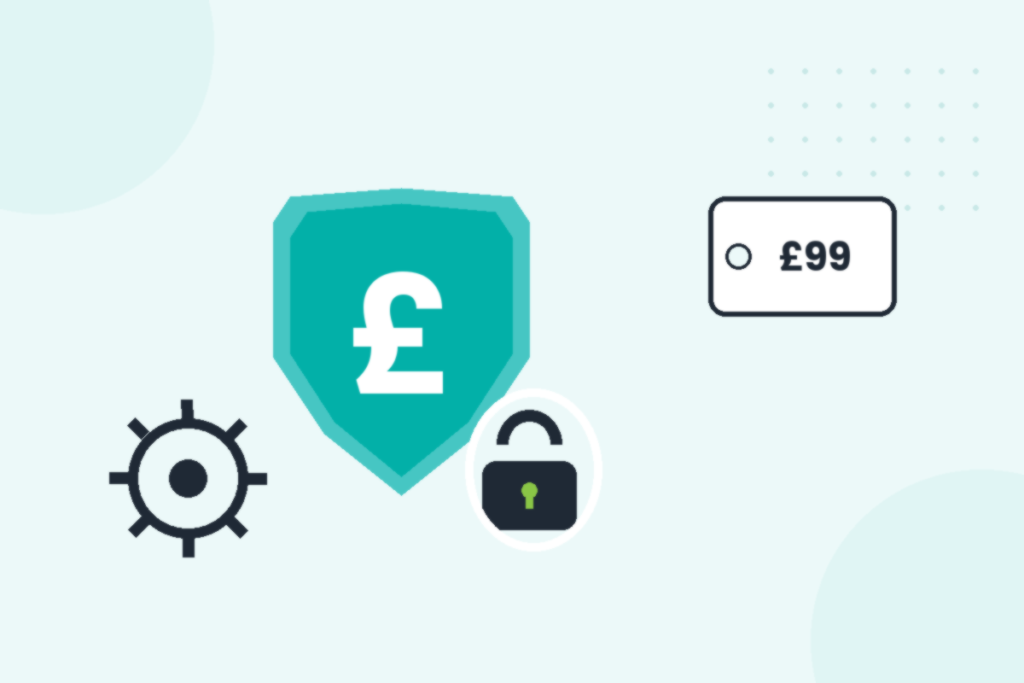
As a concrete benchmark rather than a vague estimate: UK IT Services’ one-off WordPress Malware Clean is £99, and malware removal is included at no extra cost within our Standard (£149/month) and Premium (£199/month) WordPress care plans. In our experience, other UK providers’ one-off pricing for a straightforward clean-up tends to sit in a broadly similar range, with the figure climbing once a backdoor or a repeat infection is involved. Treat a quote that’s far outside these bands, in either direction, as worth a second question rather than an automatic red flag.
What Changes the Price
The headline figure a provider gives you depends on a handful of things they’ll usually assess during a scan before confirming a price.
How deep the infection goes
A single injected script in one plugin file is a much smaller job than malware spread across core files, multiple plugins and the database. Providers usually confirm this with a scan before quoting a fixed price rather than an hourly rate open to interpretation.
Whether a backdoor has been planted
Removing the malware you can see is only part of the job. Attackers commonly leave a backdoor, a hidden admin account, a disguised file, or a scheduled task that quietly re-downloads the infection, so the same hack can happen again within days. Finding and closing that entry point takes more time than a surface clean, and it’s the main reason severe or repeat infections cost more.
Whether you have a clean backup
If there’s a backup from before the infection, a provider can compare files against it to work out exactly what’s changed, which speeds the job up considerably. Without one, they have to work out what’s malicious by inspecting the code itself, which takes longer and can push the price towards the top of a band.
First infection or a repeat one
A site that’s been cleaned before and got reinfected usually needs a more thorough investigation than a first-time hack, because the previous clean-up likely missed the actual entry point. If this sounds familiar, our guide on why WordPress sites keep getting hacked explains what’s usually been missed.
One-Off Cleanup or a Care Plan: Which Costs Less Over a Year
Whether a single clean-up or a rolling care plan works out cheaper depends on how likely your site is to be targeted again, not just on the number on the invoice today.
| One-off clean-up only | Rolling care plan | |
|---|---|---|
| Cost if hacked once this year | £75–£300 for the clean-up | £99–£199/month, with removal already included |
| Cost if hacked twice this year | Two separate invoices, often at the higher “repeat infection” rate | Same monthly cost, removal covered both times |
| What’s covered in between | Nothing, until the next incident | Updates, monitoring and backups that reduce the chance of a repeat hack |
As a rough guide: if this is a genuine one-off, your plugins and themes are kept current, and you’re comfortable managing updates yourself, a single clean-up can be all you need. If your site has been hacked before, runs a lot of plugins, handles customer data or payments, or you simply don’t have time to keep on top of updates, a care plan usually costs less over a full year once you account for the risk of a second incident, on top of removing the ongoing work of managing updates and backups yourself.
What Should Be Included in the Price
A fair quote for WordPress malware removal should cover more than deleting an obviously malicious file. Before agreeing a price, check it includes each of the following.
- A full scan of the file system and the database, not just the files you’ve already noticed something wrong with.
- Manual review by someone who checks what an automated scanner flags, since automated tools miss well-hidden backdoors.
- Identification and removal of backdoors specifically, not just the visible malware payload.
- Restoration of core WordPress files from an official, unmodified copy, in line with WordPress’s own hardening guidance.
- An explanation, in plain terms, of how the site was likely compromised.
- Basic hardening after the clean-up: updated passwords, current plugin and theme versions, and sensible file permissions.
- A stated guarantee period, with the conditions that would void it made clear upfront.
What’s Not Included, and Questions to Ask Before You Pay
Malware removal fixes an existing infection. It’s worth being clear on what it doesn’t do, so you’re not caught out later.
- It’s not the same as a penetration test or a full security audit, which look for vulnerabilities before they’re exploited rather than cleaning up after an attack.
- No reputable provider can honestly guarantee your site can never be hacked again. What a good clean-up does is close the specific entry point that was used and reduce the risk going forward.
- Most providers’ guarantees don’t cover reinfection caused by weak passwords, ignored update advice, or a nulled (pirated) theme or plugin reintroduced after the clean-up.
- A clean-up doesn’t automatically remove a Google Safe Browsing warning or search engine blacklist. That usually needs a separate reconsideration request once the site is confirmed clean.
Before you pay, it’s worth asking a provider: what exactly counts as “clean” in their process, whether they check for backdoors specifically rather than just the original payload, whether there’s a written guarantee period and what would void it, and whether they’ll tell you how the site was compromised in the first place. A provider who can’t answer these clearly is a bigger warning sign than a slightly higher price.
The Cost of Not Fixing It Properly
A cheap clean-up that only removes the visible malware, without closing the entry point, tends to cost more in the long run. Reinfection means paying for a second clean-up, and each round increases the chance of a search engine blacklist, a hosting suspension, or customers seeing a browser warning before they reach your site. The National Cyber Security Centre’s guidance on mitigating malware attacks recommends keeping regular, tested backups that sit apart from the live site, and checking backups for malware before restoring from them, since an infection can sit in a backup for some time before it’s noticed. If you’re not sure whether your site is actually infected right now, our guide on the signs your WordPress site has been hacked is a good place to start, and our step-by-step recovery guide covers what to do in the first few hours.
Frequently Asked Questions
Is WordPress malware removal ever free?
Some hosts run basic malware scanning as part of their hosting package, but genuinely thorough, manual removal is rarely free on its own. It’s more commonly bundled at no extra cost within a maintenance or care plan you’re already paying a monthly fee for, which is how it works within our own care plans.
How long does WordPress malware removal take?
Straightforward cases are often turned around within 24 hours. More complex infections, particularly ones involving backdoors or a previous failed clean-up, can take longer if a proper investigation is needed to find every entry point.
Can my web host clean the malware instead of a specialist?
Most general hosting support can run a basic scan or quarantine obviously infected files, but they don’t typically offer the manual, file-by-file review needed to find hidden backdoors. For anything beyond a very surface-level infection, a specialist clean-up is usually worth the cost.
Will I lose content or data during the clean-up?
Done properly, no. A reputable provider works carefully through the site removing malicious code rather than wiping and rebuilding it, and ideally works from a backup for comparison. This is exactly why having a clean, recent backup in place matters, both for the quality of the clean-up and for how quickly it can be done.
Think your WordPress site might be infected?
Get a same-day scan and a fixed price to clean, secure and harden your site.
Use the price bands above as your starting point, but let an actual scan of your site confirm the final figure. A provider that quotes a fixed price without ever looking at your site first is guessing, same as you would be.