What is an IT helpdesk?
An IT helpdesk is the first point of contact employees use when they need technical assistance. It receives incidents and service requests, captures the relevant details, prioritises the work, resolves suitable issues remotely and escalates more complex or physical problems to the right specialist.
What problems can an IT helpdesk handle?
The agreed scope can include account and access problems, Microsoft 365 and email, laptops and desktops, software, printers and peripherals, VPN or connectivity issues, routine user requests and other day-to-day technology problems. More complex infrastructure or security issues can be escalated.
What is the difference between an IT helpdesk and IT support?
IT support is the broader service covering the people and activities used to keep technology working. The helpdesk is normally the user-facing front door within that service: it receives requests, troubleshoots common issues, communicates with users and coordinates escalation.
What is the difference between a helpdesk and a service desk?
A helpdesk usually focuses on incidents, user questions and restoring normal service. A service desk often has a broader IT service management scope that can include service requests, knowledge management, change coordination, problem management and service reporting. The exact scope should be defined in the service agreement.
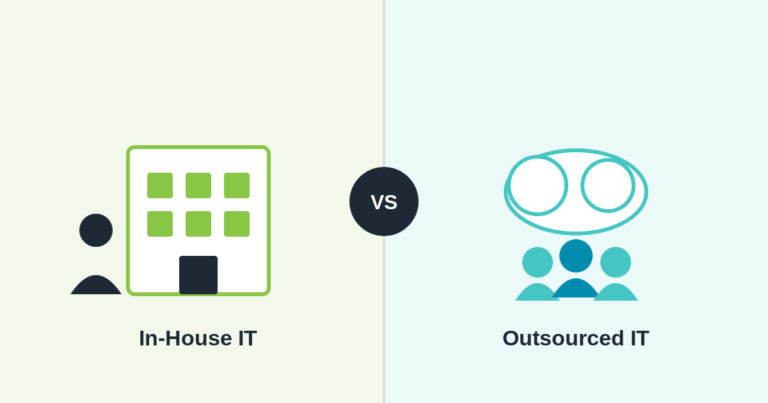
Can an outsourced IT helpdesk work alongside our internal IT team?
Yes. A co-managed model can give employees a consistent first-line helpdesk while the internal IT team keeps ownership of selected systems, projects or specialist responsibilities. Escalation rules should make the division of responsibility clear.
How do users contact the IT helpdesk?
The contact routes should be agreed during onboarding and documented for users. Depending on the service design this can include email, telephone, a ticketing route or another agreed channel, with each request recorded and handled through the same support process.
What happens if an issue cannot be fixed remotely?
The helpdesk should document what has been tested and route the issue to the appropriate next step. That may be a specialist engineer, a third-party supplier, a security escalation or
onsite attendance when physical access to equipment or cabling is required.
Do you provide out-of-hours or 24/7 helpdesk support?
Support hours and out-of-hours coverage should be confirmed in the service schedule. Businesses that require round-the-clock support should agree the eligible users, contact route, incident priorities and escalation arrangements rather than assuming every helpdesk plan includes
24/7 support.
How much does IT helpdesk support cost?
Pricing depends on the number of supported users and devices, support hours, systems in scope, contact routes, reporting requirements, onboarding complexity, onsite requirements and whether the helpdesk is fully outsourced or co-managed. A dependable price requires a defined scope.
Can you provide IT helpdesk support for London businesses?
UK IT Services can support agreed user and technology requirements for London and UK businesses, with remote support suited to many day-to-day issues. Where physical attendance is required, onsite support is subject to the location, scope and engineer availability.
What should an IT helpdesk SLA include?
A service schedule should define support hours, authorised contact routes, incident priorities, acknowledgement or first-action targets, update expectations, escalation paths, onsite terms and exclusions. Specific service figures should be agreed in writing rather than inferred from general marketing copy.
How do we switch to a new IT helpdesk provider?
A controlled transition should cover discovery, users and devices, support contacts, administrative access, documentation, suppliers, escalation routes, communication to employees, go-live and a stabilisation review. Any missing information should be recorded and rebuilt systematically.