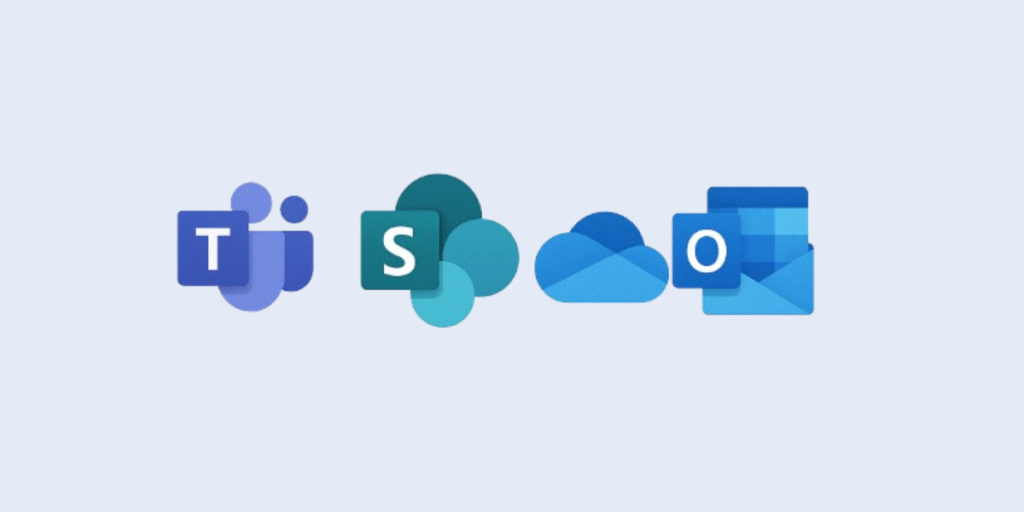
Microsoft 365 gives you a full toolkit for teamwork—chat, meetings, files, tasks, notes, whiteboards, and automation. The magic isn’t in any single app; it’s in how they work together under one login, with shared security and search.
The Core Toolkit (what each app is actually for)
1) Microsoft Teams – chat, meetings, and hubs for work
- Use for: daily chat, video meetings, calls, and working in channels tied to projects/departments.
- Why it matters: brings conversations, files (SharePoint), tasks (Planner), notes (OneNote), whiteboards, and apps into one place.
- Tips:
- Create standard channels for open teamwork; use private channels sparingly for sensitive topics.
- Use @mention, replies (not new posts), and files tab to keep context tidy.
- Recordings and transcripts auto-save to OneDrive/SharePoint.
2) SharePoint – team sites and document libraries
- Use for: shared files, team sites, intranet pages, lists, and structured content.
- Why it matters: it’s the back-end for Teams files and your intranet. Robust permissions, metadata, and pages.
- Tips:
- Organise content into document libraries (e.g., Finance, HR, Projects).
- Use hub sites to connect departments; add news and navigation.
3) OneDrive – your personal work files
- Use for: drafts, personal work, and sharing 1-to-1 before moving into a team space.
- Why it matters: Files On-Demand syncs to File Explorer/Finder; easy sharing.
- Rule of thumb: if others rely on a file, move it to SharePoint/Teams.
4) Loop – co-create live, portable content
- Use for: small, living “components” (checklists, tables, task lists) that stay in sync across Teams, Outlook, Word online.
- Why it matters: turn any chat or email into a collaborative doc without switching apps.
5) Planner & To Do – light task management
- Planner (in Teams): boards, buckets, due dates, owners for team tasks.
- To Do: your personal task list; shows Planner tasks assigned to you.
- Tip: Pin the “Tasks by Planner and To Do” app in Teams to see everything in one view.
6) OneNote – shared notebooks
- Use for: meeting notes, research, checklists, and team handbooks.
- Why it matters: real-time co-editing, sections/pages, and searchable ink/images.
7) Whiteboard – visual collaboration
- Use for: workshops, brainstorming, retrospectives.
- Why it matters: infinite canvas; sticky notes, templates, reactions. Great in hybrid meetings.
8) Stream – video management
- Use for: storing and sharing meeting recordings, training videos, and shorts.
- Why it matters: videos live in SharePoint/OneDrive with transcripts and search.
9) Viva Engage (Yammer) – company-wide communities
- Use for: announcements, Q&A, and cross-department discussions.
- Why it matters: less “chatty” than Teams; more like an internal social network.
10) Power Platform – automate and extend
- Power Automate: flows that route approvals, notify channels, move files.
- Power Apps: quick internal apps surfaced inside Teams.
- Power BI: dashboards pinned to channels.
11) Outlook & Exchange – email + scheduling
- Use for: external communications, formal messages, calendar invites.
- Why it matters: integrates with Teams for Join links, room bookings, shared mailboxes.
12) Microsoft Copilot – AI across your stack
- Use for: drafting summaries, catching up on threads, creating docs from chats/files, and meeting recaps.
- Why it matters: reduces busywork; respects your permissions.
“Right Tool for the Job” (simple decision guide)
- Need a quick answer? Teams chat.
- Running a project with files and recurring meetings? Teams channel + SharePoint library + Planner.
- Drafting on your own? OneDrive, then move to SharePoint when others need it.
- Capturing meeting notes that the team will reuse? OneNote in the channel.
- Workshop/retro? Whiteboard in the Teams meeting.
- Broadcast to the whole company? Viva Engage (and cross-post to Teams if needed).
- Automate routine steps (approvals, notifications)? Power Automate.
How it fits together (the anatomy of a Team)
Creating a Team (e.g., “Marketing”) automatically gives you:
- A SharePoint site with a Documents library ➜ “Files” tab in each channel.
- A shared OneNote notebook.
- A Planner plan (when you add Tasks app).
- A place to pin Power BI reports, websites, or apps.
Naming matters. Use a simple naming convention (e.g.,
DEPT-Marketing,PRJ-Acme-Website) so content is easy to find and govern.
Security & compliance (the foundations you want from day one)
- MFA & Conditional Access: protect logins everywhere.
- Sensitivity labels: mark content (Public/Internal/Confidential) and apply encryption/sharing rules.
- External access rules: decide if guests are allowed; restrict by domain if needed.
- Sharing defaults: choose org-wide link settings (people in your org vs anyone with link).
- Retention policies: set how long chats, emails, and files are kept.
- Backups: Microsoft provides availability, not full point-in-time backup—use a SaaS backup for Exchange/SharePoint/OneDrive/Teams.
- Lifecycle: archive or delete inactive Teams/sites on a schedule.
Rollout plan (30 / 60 / 90 days)
Days 0–30: Foundations
- Enable Teams with a small pilot (one department + one project).
- Create Team templates (channels: General, Planning, Delivery, Stakeholders).
- Train on Files in Teams/SharePoint, meeting basics, @mentions, Loop components.
- Turn on MFA, Safe Links/Attachments, and baseline sensitivity labels.
- Publish a 1-page “Which tool when?” guide.
Days 31–60: Scale & standardise
- Migrate shared drives to SharePoint; sync with OneDrive client.
- Introduce Planner/Tasks and OneNote in channels.
- Launch Viva Engage for cross-company communities.
- Build 2–3 Power Automate flows (example: approvals → Teams, forms → SharePoint).
- Set retention and external sharing policies.
Days 61–90: Optimise & govern
- Add Power BI dashboards to Teams.
- Introduce Whiteboard templates for workshops/retros.
- Start a Team lifecycle process (review/archive after inactivity).
- Publish KPIs (see below) and a quarterly improvement plan.
Usage KPIs (what leadership should see monthly)
- Active users in Teams (chat + meetings)
- Files moved to SharePoint/Teams vs legacy shares
- Planner task completion rates and overdue count
- Meeting quality (join issues, device stats)
- External sharing: # of guest users, domains, expired links
- Security posture: MFA coverage, label adoption, backup status
Everyday best practices (make collaboration stick)
- Keep conversations in channels, not private chats, when the team needs visibility.
- Reply to threads (don’t start new posts) to keep context.
- Use @mention people/teams for accountability.
- Store team files in Files tab (SharePoint), not in chat uploads.
- Use PowerPoint Live in Teams for better presenting (notes, laser pointer, captions).
- Pin critical apps/tabs: Tasks, OneNote, Power BI.
- Record and auto-transcribe important meetings; share a Loop recap.
Common scenarios (with tool recipes)
- Project kick-off
- Create
PRJ-Client-Projectteam → channels: General, Planning, Delivery. - Files in SharePoint; tasks in Planner; weekly meeting with meeting options set (presenters = PMs).
- Add a status dashboard (Power BI) tab.
- Create
- Customer support shared mailbox
- Add shared mailbox in Outlook; pin Support team in Teams.
- Create triage channel with a Planner board; automate new emails → Teams via Power Automate.
- Company-wide announcement
- Post in Viva Engage community; cross-post to Teams Company Announcements channel; attach a Loop FAQ.
- Sales proposals
- Store templates in SharePoint; co-author in Word/PowerPoint online; track approvals via Approvals app or Power Automate.
Governance quick starts
- Team creation: restrict to trained owners or approve via request form.
- Naming policy: prefixes (
DEPT-,PRJ-,COM-) + short names. - Guest access: allowed only in project teams; enforce domain allow-list.
- Review cadence: quarterly site/Team review; archive stale ones.
- Templates: use Team templates for common structures (tabs, channels, Planner, OneNote).
FAQs
Is Teams a replacement for email?
No—use email for external/formal communication. Use Teams chat/channels for day-to-day collaboration.
Where should we save files—Teams or SharePoint?
They’re the same backend. If the work is team-based and ongoing, save in the Team’s Files (SharePoint). Personal drafts go to OneDrive first.
Do we need Zoom/Slack as well?
Usually not. Teams covers chat/meetings/calling; the value grows when everything’s in one place.
How do we keep Teams from getting messy?
Templates, naming policy, owner training, and a quarterly archive routine.
Is Copilot safe with our data?
Copilot follows your existing permissions. Users only get insights from content they can already access.
One-page “Start Here” for users
- Chat for quick questions, Channels for team work, Meetings in Teams, Files live in channel Files.
- Loop to co-edit small blocks anywhere.
- Planner for team tasks; To Do for personal tasks.
- OneNote for shared notes; Whiteboard for workshops.
- Share from Teams/SharePoint, not email attachments.
- Turn on MFA and save files to OneDrive/SharePoint (they’re backed up and searchable).
If your team relies on Microsoft 365, our managed IT support can set up, secure and manage your collaboration tools for you.