Every business owner asks this question eventually. You need IT support, but you don't want to commit before you understand what it actually costs. The honest answer is that it depends on what you need, but there's a clear pricing framework and a sensible range to help you work it out.
Here's a plain-English breakdown of what UK businesses actually pay in 2026.
The Two Main Models of IT Support
Before you can compare prices, you need to understand the two types of IT support most small businesses choose between.
Break-Fix IT Support
Break-fix is the traditional model. Something goes wrong, you call a provider, they fix it, you pay a bill. Hourly rates for UK businesses typically sit between £80 and £150 per hour, depending on the provider and the complexity of the problem.
It sounds cheaper, and in quiet months it can be. But a single server failure or ransomware incident can generate a bill of £5,000 to £20,000 in emergency callout and recovery costs alone. Your IT spend becomes unpredictable, and you only get help after something has already gone wrong.
Managed IT Support
Managed IT support works on a fixed monthly fee. Your provider takes responsibility for keeping your systems running, monitoring for problems before they turn into disruptions, and handling helpdesk requests from your team. You know exactly what you're paying each month.
In the UK, managed IT support typically costs between £40 and £150 per user per month in 2026, depending on the level of service and the size of your business. Most small businesses end up paying between £60 and £80 per user per month for a solid package.
For a team of 10, that works out to roughly £600 to £800 per month. For 20 staff, expect to budget somewhere between £1,200 and £1,600 per month.
What Affects the Price?
Several factors push the cost up or bring it down.
Number of users is the biggest one. Managed IT contracts are priced per user, so the more staff you have, the more you pay overall. Larger businesses often benefit from volume pricing, which can reduce the per-user rate.
What's included matters too. A basic package might cover remote helpdesk support and monitoring. A more complete package brings in cybersecurity, backup management, Microsoft 365 administration, patch management, and a dedicated account manager. Those extras add real value, but they also add to the monthly cost.
Response time requirements affect pricing as well. Standard business-hours support costs less than a contract that guarantees a response at any hour. If your business depends on systems being available around the clock, 24/7 IT support will cost more than a 9-to-5 arrangement.
Onsite cover is another variable. If your provider needs to send engineers to your office, that usually costs more than purely remote support. Many issues get resolved remotely within minutes, but some hardware problems or infrastructure work needs someone in the room. Onsite IT support is typically priced separately from your monthly contract, or built into a higher-tier package.
What Should You Get for Your Money?
A properly managed IT support contract at the £60 to £80 per-user mark should include:
- Unlimited remote helpdesk support during business hours
- Proactive 24/7 monitoring of your systems and network
- Patch management and software updates
- Antivirus and endpoint protection
- Email security
- Regular data backups
- Microsoft 365 administration
- An annual review of your IT setup
If a provider is charging those rates but not delivering most of the above, keep looking. Good IT support means fewer disruptions and faster fixes — not just someone to call when things have already broken.
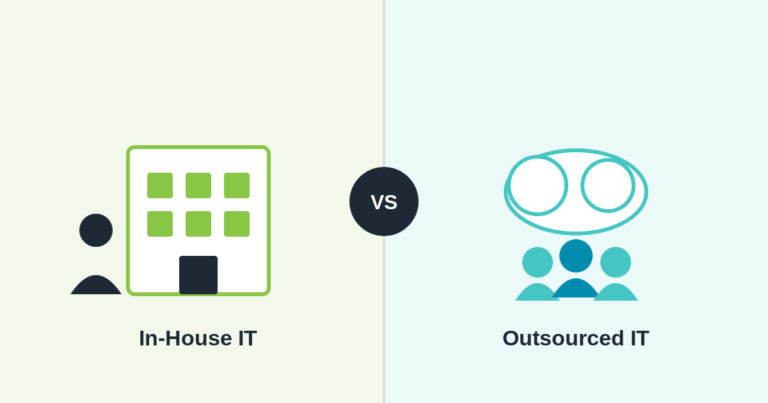
Is Outsourced IT Support Cheaper Than Hiring In-House?
For most small businesses, yes. By quite a margin.
A junior in-house IT employee in the UK costs between £28,000 and £40,000 per year in salary alone, before you account for national insurance contributions, training, equipment, and holiday cover. One person also can't provide round-the-clock coverage, and they're unlikely to have deep expertise across cybersecurity, cloud infrastructure, and Microsoft 365 all at once.
Small business IT support from a managed provider gives your team access to a full pool of engineers and specialists. According to IT pricing data from managed service providers, a 30-person business typically pays around £2,100 per month for fully managed IT support. That's roughly £25,200 per year, which is a fraction of what you'd pay to hire an equivalent in-house team.
The maths rarely favour hiring in-house for businesses under 100 staff.
What About Pay-As-You-Go IT Support?
Some providers offer pay-as-you-go contracts, where you buy a block of hours upfront at a reduced rate. This can work for very small businesses with simple needs, but it comes with a catch: hours run out at the worst possible moment, and reactive support is always slower than proactive monitoring.
If your business relies on technology to operate (and most do), an ad-hoc arrangement leaves you exposed. You're paying to fix problems rather than prevent them. Outsourced IT support on a managed basis is almost always more reliable and, over the course of a year, often works out cheaper once you factor in the real cost of downtime.
UK businesses collectively lose an estimated £3.7 billion annually to IT downtime, with micro and small businesses bearing the largest share of that burden. A few hours of systems being down in a busy week can cost thousands in lost productivity, missed orders, and damaged client relationships.
Frequently Asked Questions
What is the average IT support cost for a small UK business?
Most small UK businesses pay between £60 and £80 per user per month for managed IT support. For a team of 10, that's roughly £600 to £800 per month. Pricing varies by service level, number of users, and whether you need onsite cover or out-of-hours availability.
Is managed IT support worth it for small businesses?
Yes, for most small businesses. A managed contract gives you proactive monitoring, a full helpdesk team, and predictable monthly costs. It's almost always cheaper than hiring in-house IT staff, and it reduces the risk of costly downtime and security incidents.
What's the difference between break-fix and managed IT support?
Break-fix support is reactive: you pay when something goes wrong, usually at an hourly rate of £80 to £150. Managed IT support is a fixed monthly fee covering ongoing monitoring, helpdesk access, and proactive maintenance. Managed support prevents many problems before they happen; break-fix only responds after they do.
Can I get IT support if my business has fewer than 5 staff?
Yes. Many providers support businesses of all sizes, including very small teams. Some offer packages starting from around £200 to £300 per month for businesses with just a handful of staff. It's worth requesting a tailored quote rather than assuming IT support is only for larger organisations.
What does a basic managed IT support package include?
A good basic package covers remote helpdesk support, 24/7 system monitoring, patch management, antivirus protection, and email security. More complete packages add backup management, Microsoft 365 administration, and a dedicated account manager who reviews your IT regularly.
How quickly can IT support be set up for my business?
Most providers can onboard a new client within two to four weeks. UK IT Services handles the full transition process, including any handover from a previous provider, so your team experiences minimal disruption. Emergency IT support is also available if you need immediate cover while a longer-term contract is arranged.
Ready to Find Out What IT Support Would Cost Your Business?
Knowing the pricing ranges is a start, but every business has different systems, different risks, and a different number of staff. The only way to get an accurate figure is to speak to a provider who can assess your setup properly.
UK IT Services offers a free IT consultation for businesses across the UK. We'll look at what you have, what you need, and give you a clear, no-obligation quote. Get in touch and we'll take it from there.