

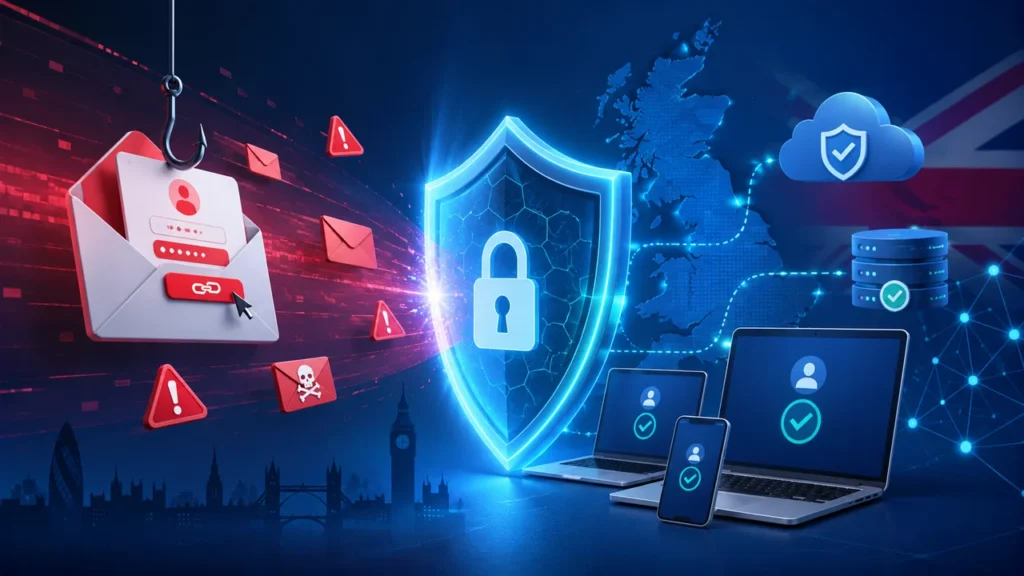

Phishing is the number one way attackers get into UK business systems. Not through sophisticated hacking, not through clever exploits, but through a convincing email that tricks someone into handing over their login details. According to the UK Government’s Cyber Security Breaches Survey 2025/2026, 43% of UK businesses experienced a cyber breach or attack in the last 12 months, with phishing the most common attack type by a significant margin. Your business could be next. Here’s what you need to know, and what you can do about it right now.
What Is a Phishing Attack?
A phishing attack is when a criminal sends a message, usually an email, that appears to come from a trusted source. The goal is to get someone to click a link, enter their credentials, or open a malicious file. Once they do, the attacker gains access to your accounts, your data, or your money.
The problem is these emails have changed. The badly written messages full of spelling mistakes you might remember are largely gone. Attackers now use AI tools to write emails that sound exactly like your bank, your software supplier, or even your own colleagues. A fake invoice from your company’s accounts team to a junior member of staff is something most people wouldn’t question without a clear process in place.
The Most Common Types of Phishing UK Businesses Face
Email Phishing
The most common form. A fraudulent email designed to look official, usually with a link to a fake login page. The goal is typically to steal Microsoft 365 credentials or access to cloud systems.
Spear Phishing
Targeted attacks aimed at a specific person in your business. The email will reference real details about you or your company, making it significantly harder to spot than a generic mass email.
Smishing and Vishing
Phishing carried out over SMS (smishing) and voice calls (vishing). Deepfake technology now allows attackers to clone the voice of a director or finance manager to authorise fraudulent bank transfers. What sounds like your MD calling could be a recorded fake.
Business Email Compromise (BEC)
A scammer takes over or spoofs a real business email address, then sends instructions to your team to transfer money, change supplier payment details, or share sensitive data. These attacks tend to arrive at exactly the right moment, referencing real projects and real people.
How to Spot a Phishing Email
Even the best filters miss things occasionally. Your staff are often the last line of defence, so knowing the warning signs matters:
- The sender’s email address looks slightly different from the real domain
- There’s urgency and pressure to act immediately, without thinking
- The link URL doesn’t match the company it claims to be from
- You’re asked to log in via a link in the email rather than going directly to the website
- The request is unusual, even if the sender looks familiar
When in doubt, pick up the phone and verify directly with the person the email claims to be from. A 30-second call is worth far more than the cost of a breach.
Steps to Protect Your Business from Phishing
Turn On Multi-Factor Authentication (MFA)
Multi-factor authentication (MFA) means that even if someone steals a password, they cannot get in without a second form of verification. Microsoft’s own data shows MFA blocks over 99% of account compromise attacks. This applies across your Microsoft 365 accounts, email, and any cloud system your team uses. If your staff use authentication apps, our guide on how to transfer authenticator apps to a new phone covers how these apps work and how to keep access when switching devices.
Set Up Email Authentication Records
SPF, DKIM, and DMARC are DNS records that verify your emails are genuinely from you, and prevent attackers from spoofing your domain. Many UK businesses still don’t have all three in place. Your IT provider can set these up quickly, and they make a real difference to how much spoofed mail gets through to your contacts.
Train Your Team Regularly
Technology alone won’t stop phishing. According to research compiled by UK cybersecurity analysts, 52% of UK SME employees have received no cybersecurity training at all. Short, regular sessions work far better than a single annual module. Simulated phishing tests, where your team receives fake phishing emails to see who clicks, are particularly useful for identifying gaps.
Use Advanced Email Filtering
A good email security solution catches the majority of phishing attempts before they reach inboxes. Microsoft 365 Defender includes anti-phishing policies that can be configured for your organisation. A managed IT support provider can set this up correctly and keep policies updated as threats evolve.
Create a Verification Culture
Any request involving money, credentials, or access to sensitive data should require a second check before action is taken. A phone call to confirm. A walk across the office. Whatever fits your workflow. This matters most for payment requests, supplier detail changes, and anything marked as urgent from an external sender.
What to Do If Your Business Is Targeted
If someone in your team clicks a phishing link or enters their details into a fake page, speed is everything.
Reset compromised account passwords immediately. Turn on MFA if it wasn’t already active. Disconnect the affected device from the network if there’s any chance malware was downloaded.
Contact your IT support team straight away. They can check for unauthorised access, review login activity, and assess what data may have been exposed. If financial details were involved, contact your bank. Report the attack to the National Cyber Security Centre (NCSC) via their report a phishing attempt tool. Reporting helps protect other UK businesses.
If you don’t currently have dedicated IT support and you’re managing this alone, our remote IT support team can step in fast. Most issues are handled remotely within minutes.
Frequently Asked Questions
Is phishing the biggest cyber threat to UK businesses?
Yes. According to the UK Government’s Cyber Security Breaches Survey 2025/2026, phishing is the most common type of cyber attack experienced by UK businesses. It affected 38% of all businesses surveyed in the past 12 months and was the most disruptive incident for those affected.
How do attackers make phishing emails so convincing now?
AI tools allow attackers to generate emails that are grammatically correct, personalised, and written in the tone of whoever they’re impersonating. Deepfake audio technology can also clone voices, making phone-based phishing very difficult to detect without a verification process.
Does multi-factor authentication really stop phishing?
MFA stops most account takeovers even when a password has already been stolen. Microsoft data suggests it blocks over 99% of account compromise attacks. It doesn’t prevent someone from clicking a link, but it does prevent the attacker from using stolen credentials to access your systems.
How often should we train staff on phishing?
Short, regular sessions work far better than a single annual module. Monthly simulated phishing tests and brief refresher training every quarter are considered good practice. Training should reflect current attack types, which change frequently as new techniques emerge.
What is spear phishing and why is it more dangerous than regular phishing?
Spear phishing targets a specific person or organisation rather than sending mass emails at random. Attackers research their targets first, referencing real names, job titles, or current projects to make the message feel genuine. This makes spear phishing harder to spot and more likely to succeed.
Do I need a specialist IT company to handle email security?
Not always, but it helps. Email authentication records and advanced filtering do require some technical knowledge to set up correctly. If you’re not confident with DNS settings or Microsoft 365 admin configuration, having a specialist set this up properly is much safer than getting it wrong and leaving gaps.
The Short Version
Phishing attacks are getting sharper, not going away. But most successful attacks succeed because basic protections aren’t in place, not because the attacker is technically sophisticated. MFA, email authentication, regular staff training, and a clear verification culture can close the gaps that most criminals rely on.
If you’d like help reviewing your current email security or setting up these protections across your business, get in touch with the team at UK IT Services for a free consultation.