Fast, installable, and far cheaper than a native app. That is what a progressive web app offers. But most UK business owners have never heard of them, and even fewer know whether building one is worth the investment.
If you have been thinking about going beyond your website but do not want the time and cost of building a full mobile app, a progressive web app might be exactly what you need. This guide explains what they are, how they work, and how to decide whether one is right for your business.
What Is a Progressive Web App?
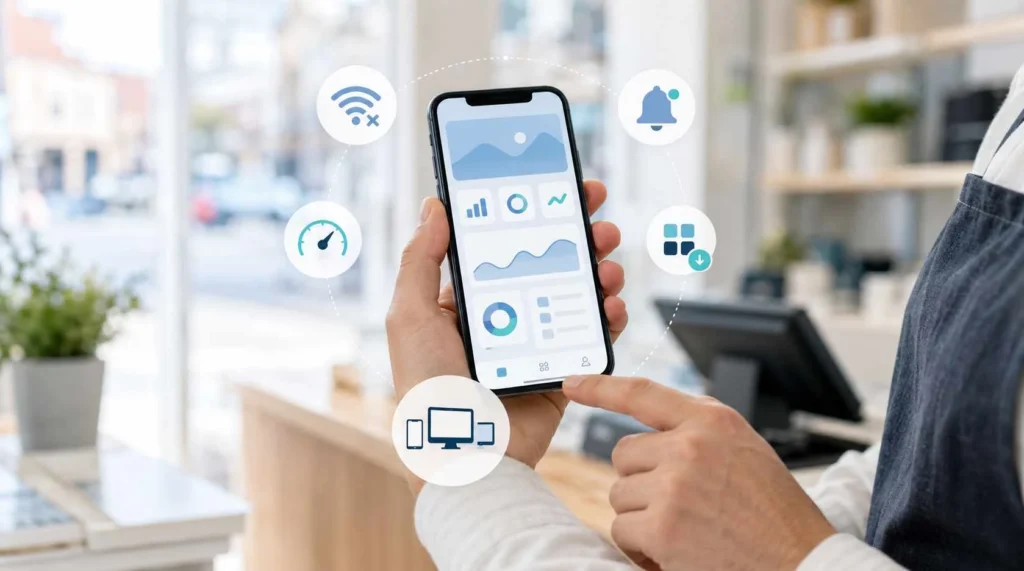
A progressive web app (PWA) is a website that behaves like a mobile app. Users can add it to their phone’s home screen, use it offline, and receive push notifications, all without downloading anything from the App Store or Google Play.
The technology has been around since the mid-2010s, but adoption has grown sharply. Major brands including Starbucks, Twitter, and Pinterest have built PWAs. After Starbucks launched its PWA, its daily active web users doubled, largely because the app continues to work on poor mobile connections rather than failing to load entirely.
A PWA is built using standard web technologies: HTML, CSS, and JavaScript. Two extra components give it app-like behaviour. A service worker is a background script that handles offline caching. A web app manifest is a configuration file that tells the browser how to display and install the app. That, in plain terms, is what separates a PWA from a traditional website.
How Does a PWA Differ from a Regular Website?
A regular website opens in a browser and requires an active internet connection to load. A PWA does the same, but it also lets users install it to their phone or desktop without going through an app store. Once installed, it appears as its own app icon, runs in a standalone window without browser address bars, and can serve cached content when there is no signal.
Four things set a PWA apart from a standard business website:
- Installability: Users get prompted to add the app to their home screen, removing the friction of searching for your site each time they want to use it.
- Offline access: Cached content keeps the app usable even when the connection drops.
- Push notifications: The app can send messages to users who have opted in, useful for promotions, reminders, and updates.
- Full-screen mode: When launched from the home screen, the PWA runs without browser controls, giving a clean, app-like look and feel.
Your existing website stays exactly as it is and continues to rank in Google. The PWA is an additional layer built on top of it.
PWA vs Native App: What Is the Difference?
A native app is built for a specific platform, either iOS or Android, using platform-native code. It is downloaded from the App Store or Google Play, has full access to device hardware such as the camera, GPS, and Bluetooth, and can run background tasks at a deeper system level.
A PWA is built once using web technologies and works across all devices and browsers. It does not live in an app store. It has more limited access to device hardware than a native app, though that gap has narrowed sharply. Modern PWAs can access cameras, GPS, and microphones on most devices without issue.
The real differences come down to three things. First, cost: a native app for both iOS and Android typically costs between £20,000 and £150,000 to build. A PWA often costs much less because there is only one codebase to build and maintain. Second, speed to market: native apps go through an app store review process that can take days or weeks, whereas PWA updates go live immediately, just like a website change. Third, discovery: native apps can be found by browsing the App Store, while PWAs are found through Google search, which works in your favour if you already invest in SEO.
If your business genuinely needs deep hardware integration, say an augmented reality feature or complex offline data sync, a native app still has the advantage. For most UK small and medium-sized businesses, a PWA hits the right balance of capability and cost. You can read more about the full range of options on our web development services page.
The Business Case for a Progressive Web App
The commercial case for a PWA often starts with mobile loading speed. Research from Google shows that users typically leave a website that takes more than three seconds to load on mobile. PWAs are built to load fast even on slow connections, because they serve cached content rather than fetching everything fresh on each visit.
Push notifications are a strong commercial tool. Email open rates in the UK typically sit between 20 and 30 per cent, according to industry data from the Data and Marketing Association. Push notification open rates can be three to four times higher, particularly for time-sensitive offers or reminders, making them one of the more direct ways to re-engage customers.
Reducing the steps between a customer and a purchase matters too. Every extra tap costs you conversions. An installed PWA removes the need to open a browser, find your site, and wait for it to load. Your customer is one tap away at all times.
If your business relies on repeat visits, whether a booking system, a customer portal, a loyalty scheme, or a delivery tracking tool, a PWA makes good sense. You get app-like engagement without the cost and complexity of building for two separate app stores.
Which Types of UK Business Benefit Most from PWAs?
Not every business needs a PWA. But for certain use cases, they make a real difference to how customers engage with your brand.
Retail and e-commerce businesses that want to reduce cart abandonment and increase repeat purchases. A PWA lets customers browse products offline, receive promotional notifications, and check out faster on mobile, all of which contributes to better conversion.
Service businesses with booking systems, including trades, clinics, salons, and consultancies, where customers need to book, confirm, or reschedule appointments without downloading a dedicated app.
B2B businesses with customer portals, where clients need to log in, check account information, download documents, or raise support requests. A PWA gives clients a clean, app-like interface without IT departments needing to manage app installations across an entire business.
Businesses with field teams that need access to job sheets, customer data, or checklists from their phones, sometimes in areas with little or no mobile signal.
Hospitality and food businesses looking to take orders, manage table bookings, or run loyalty programmes without the ongoing cost of maintaining a presence on the App Store.
If your business does not fit clearly into one of these categories, a well-designed, fast-loading mobile website may be everything you need. The key question is whether your users need app-like functionality between visits, or simply a fast and well-designed site. Our web design team can help you work out which approach suits your audience best.
How Much Does a Progressive Web App Cost?
Costs vary depending on complexity, but here is a realistic range for the UK market in 2026.
A basic PWA conversion, which means adding offline support and installability to an existing website, typically costs between £1,500 and £5,000. A custom PWA with bespoke functionality such as booking systems, user accounts, and push notifications usually runs from £8,000 to £30,000. A complex PWA with database integration, real-time features, and custom back-end work generally starts at £30,000 and above.
Compare that to native app development. A polished iOS and Android release typically costs between £50,000 and £150,000, plus ongoing maintenance costs for two separate codebases. That is before you factor in the time it takes to get through app store reviews every time you need to make a change.
Ongoing costs are also lower with a PWA. There are no App Store fees. Updates do not need to go through a review process. Maintenance is handled as part of your website rather than as a separate project. That said, the cheapest option is not always the right one. If a native app offers capabilities your business genuinely needs, it may justify the extra cost. A good web development team will always start by understanding your goals before recommending a direction.
What Are the Limitations of Progressive Web Apps?
PWAs are not right for every situation. Here are the limitations worth knowing before you commit.
iOS support has historically lagged. Apple was slower than Google to support PWA features on Safari. Push notifications on iOS were not available until iOS 16.4 in 2023, and some features still behave differently on iPhone compared to Android. The gap is closing, but it is worth factoring in if the majority of your audience uses iPhones.
App Store visibility is absent. A PWA cannot be submitted to the App Store in the traditional sense. If your target customers primarily find apps by browsing the App Store rather than through Google search, that is a real disadvantage worth taking seriously.
Hardware access is more limited. Certain device capabilities, including NFC payments, background audio, advanced Bluetooth connections, and some biometric features, remain more reliable in native apps.
The install prompt is easy to miss. Some users simply do not realise they can add a PWA to their home screen, and the experience varies slightly across browsers and devices. This means your installation rate may be lower than you expect without some gentle prompting on the page itself.
None of these are deal-breakers for most business use cases, but they are worth an honest conversation with your developer before committing to a direction.
Frequently Asked Questions
Do users need to download a progressive web app?
No. A PWA runs in the browser like a regular website, so there is nothing to download from an app store. Users can choose to install it to their home screen, which gives it a native app feel, but that step is optional. The PWA works in the browser whether or not the user installs it.
Can a PWA send push notifications to my customers?
Yes, provided users opt in. PWAs can send push notifications on Android devices and on iPhones running iOS 16.4 or later. This is one of the main commercial advantages over a standard website, as you can re-engage customers with offers, reminders, or order updates without relying solely on email.
Will a PWA affect my website’s Google rankings?
A well-built PWA can actually improve your rankings. Google’s Core Web Vitals reward fast-loading, mobile-friendly sites, and PWAs are built to perform well on exactly those measures. Your existing website and its SEO are not replaced by the PWA. The PWA is an enhancement layer built on top of your existing site.
Is a PWA the same as a mobile app?
No. A mobile app is a native application downloaded from the App Store or Google Play, built specifically for iOS or Android. A PWA is a website that has been enhanced to behave like an app. It is installed from the browser, built using web technology, and works across all platforms from a single codebase without separate development for each platform.
How long does it take to build a progressive web app?
A basic PWA conversion, adding offline support and installability to an existing website, typically takes two to four weeks. A custom PWA with user accounts, booking systems, or push notification campaigns usually takes two to four months, depending on the scope and complexity of the project.
Do I need a PWA or a native app for my UK business?
That depends on what you need it to do. If you want to improve mobile engagement, allow customers to use your service offline, and send push notifications without the cost of native app development, a PWA is usually the more practical choice for most UK businesses. If you need deep hardware integration or a strong App Store presence for customer acquisition, a native app may be worth the extra investment. The right starting point is a conversation with a web development specialist who can look at your requirements before making a recommendation.
Not sure which approach is right for your business? Our team can assess your requirements and help you decide whether a PWA, a native app, or a redesigned mobile website is the right next step. Explore our web development services or get in touch for a free consultation.